Make the Interview Work Both Ways
An interview is a two-way conversation, and the questions you ask can matter as much as the answers you give.
Here is the guide at a glance:
- Good questions show a hiring manager that you are prepared, engaged, and serious about the role.
- They also give you the helpful insight you need to judge whether the job, the team, and the company culture fit your goals.
- This guide covers eight strong questions, what each one reveals, and why it helps both sides.
- The best questions cover daily work, success, people, management style, culture, growth, and next steps.
Most interviews end with some version of “Do you have any questions for us?” That closing interview question often shapes the impression you leave. Treat it as your turn to run a short interview of your own.
Why Asking Questions Matters for Both Sides
Asking questions serves two purposes at once. For the interviewer, be it a single hiring manager or a full search committee, your questions are a signal. Some interviewers weigh the quality of your questions when deciding whether to move you forward, so a thoughtful list of questions works in your favor. For you, the answers are due diligence that helps you decide if the role is worth accepting.
The reverse is also true. Coming in with nothing to ask can hurt you, because being unprepared to ask questions signals a lack of interest in the job. A mix of types of questions, from broad ones to a few direct questions, keeps the conversation going and gives you a second look at whether the potential employer matches what you want. A few topics are better saved for later, though:
- Hold detailed salary and benefits questions until you have a job offer or a later round.
- Skip anything already answered on the company website or in the job description.
- Avoid questions that only cover what the company can do for you in a first interview.
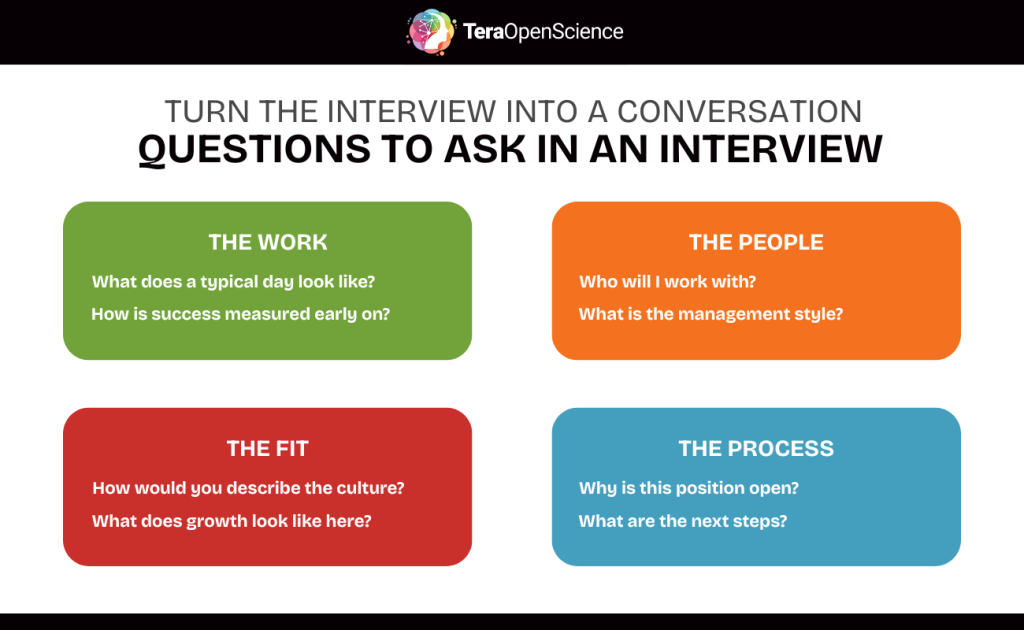
1. What Does a Typical Day Look Like in This Role?
This is one of the most useful questions a job seeker can ask, because the job description rarely captures the real work. Make your first question count here, since a clear answer tells you how you would spend your hours, which tools and team members you would work with, and whether the daily rhythm matches how you like to work.
Why it’s good: A clear answer tells you how you would spend your hours, which tools and team members you would work with, and whether the daily rhythm matches how you like to work.
What it signals: Asking it early helps the interviewer, since smart questions show preparation and critical thinking. It shows that you are picturing yourself in the position and thinking about how to contribute, which is exactly the mindset a hiring manager wants to see.
2. How Will You Measure Success in the First 90 Days?
This question turns a vague job description into concrete goals. The answer shows you what the interviewer expects a strong new hire to accomplish early, and it reveals whether the team has a clear plan for onboarding or is still figuring the role out.
Why it’s good: You learn the priorities you would be judged on, and you find out whether the team has a clear plan for onboarding or is still figuring the role out.
What it signals: The interviewer sees that you care about results rather than just landing the job. That shared clarity lowers the risk of a mismatch after you start.

3. Who Will I Work With Day to Day?
Ask this to understand the people and the department behind the job title. The answer maps out your future team members, the size of the group, and how work moves between roles. It also hints at how collaborative or independent the position really is.
Why it’s good: The answer maps out your future team members, the size of the group, and how work moves between roles, since your coworkers shape your daily experience as much as the work itself. For a warmer note, you can ask the interviewer about their own personal experience on the team, their favorite question to ask candidates, or even a small pet peeve, which often reveals more than a scripted answer.
What it signals: The question shows that you value collaboration and want to fit into the group, which is a helpful insight when they compare interview candidates.
4. How Would You Describe the Management Style Here?
This question gets at how you would be led, which is one of the strongest predictors of whether you will thrive. Gallup found that managers account for at least 70% of the variance in team engagement, so the leadership style of your future boss deserves a direct question.
Why it’s good: The answer tells you how much independence you would have, how feedback is delivered, and how decisions get made, which is one of the strongest predictors of whether you will thrive.
What it signals: It opens an honest conversation about expectations, which helps both of you judge fit before a job offer is ever on the table.
5. How Would You Describe the Company Culture?
Culture shapes whether you will feel at home, and it clearly matters to job seekers. Glassdoor found that 77% of adults consider a company’s culture before applying, so asking about it in the interview is a natural next step.
Why it’s good: A useful answer describes how the team communicates, handles conflict, and recognizes good work, so listen for specifics rather than slogans.
What it signals: Your question gives the interviewer a chance to sell the company on its strengths, which most hiring managers are glad to do.

6. What Do Growth and Career Development Look Like Here?
This question ties the role to your future plans and career goals. It reveals whether the company promotes from within, supports professional development, and offers a real path forward, from an entry-level role up to senior positions. That path is a major factor in how long people stay.
Why it’s good: It reveals whether the company promotes from within, supports professional development, and offers a real path forward, from an entry-level role up to senior positions. Median US employee tenure was only 3.9 years in January 2024, and 94% of employees say they would stay at a company longer if it invested in their career development.
What it signals: Asking about growth shows the interviewer you plan to commit and contribute over time, not just fill a seat.
7. Why Is This Position Open?
This direct question uncovers the story behind the job. The answer tells you whether the role is new, whether the last person was promoted, or whether the team struggles with turnover. Each of those points to a different reality you would be stepping into.
Why it’s good: The answer tells you whether the role is new, whether the last person was promoted, or whether the team struggles with turnover, and each points to a different reality you would be stepping into. Gallup estimates that replacing an employee costs one-half to two times their annual salary, so a pattern of departures is worth understanding.
What it signals: Asked politely, this question shows the interviewer that you do your homework and think carefully before accepting an offer.
8. What Are the Next Steps in the Process?
Close the conversation by asking about the interview process from here. The answer gives you a timeline, tells you who else you might meet, and signals how close you are to a decision. It also lets you plan your follow-up.
Why it’s good: The answer gives you a timeline, tells you who else you might meet, and signals how close you are to a decision, so you can plan your follow-up.
What it signals: It shows enthusiasm and keeps you organized, and it sets up the moment to send a short thank-you note that restates your interest. A candidate who asks about next steps reads as someone genuinely ready to move forward.
Match the Question to What You Want to Learn
Different questions surface different information. The table below groups common types of questions by what they help you uncover, so you can build a balanced list before your next job interview.
| Question type | What to ask | What it reveals |
| The role | “What does a typical day look like?” | Real duties beyond the job description |
| Success | “How is success measured early on?” | Priorities and onboarding clarity |
| People | “Who will I work with?” | Team, department, and collaboration |
| Leadership | “What is the management style?” | How you will be led |
| Culture | “How would you describe the culture?” | Values and daily environment |
| Growth | “What does career development look like?” | Long-term fit and future plans |
Turn Good Questions Into Real Opportunities
The strongest interviews are conversations where both people learn something. Thoughtful questions help you gather useful insight, show a hiring manager that you are prepared, and give you the information to decide whether a role fits your career goals. The habit of asking good questions is one worth building for every interview, from a first phone interview to a final round.
That same curiosity can open doors well beyond a single interview. TeraOpenScience is an open platform where students, researchers, and professionals collaborate, share work, and get seen by potential collaborators, grant funders, and recruiters for gig, consulting, and full-time opportunities. Create a free TeraOpenScience account to build a public profile, contribute to real projects, and put yourself in front of the people who hire. Explore the TeraOpenScience platform and remember its motto: be open, be seen.