The Big Picture on Cross-Discipline Research
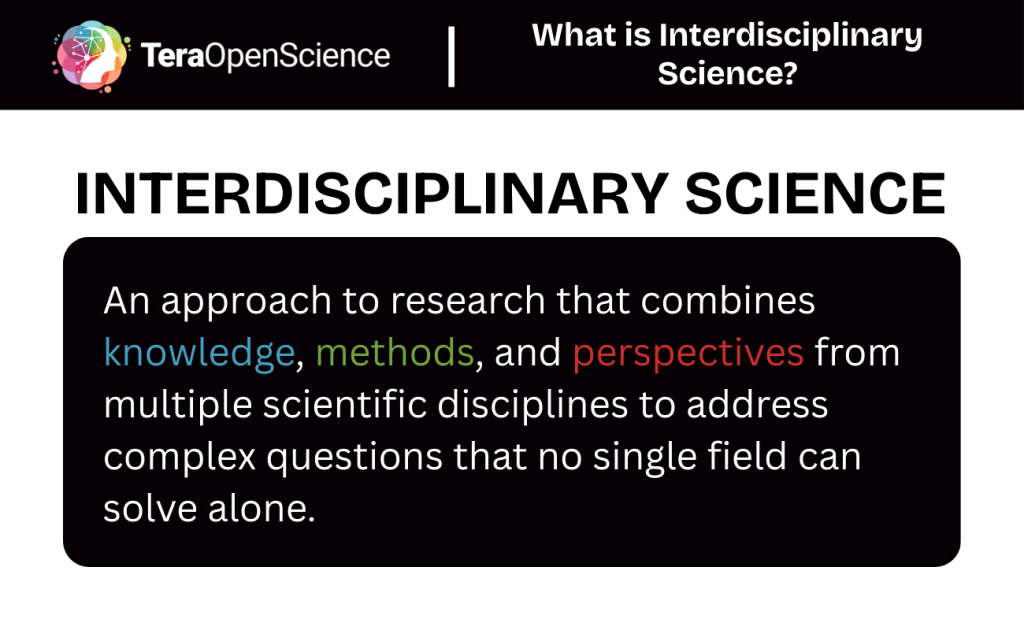
Scientific breakthroughs rarely happen inside a single field anymore. Interdisciplinary science brings together knowledge, methods, and perspectives from multiple scientific disciplines to tackle problems that no one field can solve alone.
At a Glance:
- Interdisciplinary science is an approach to research that integrates theories, methods, and findings from two or more academic disciplines to address complex questions.
- It plays a growing role in areas like climate change, human health, environmental science, and computer science, where challenges don’t fit neatly into one category.
- Interdisciplinary collaboration allows research teams to combine expertise from the natural sciences, social sciences, physical sciences, and engineering to produce more complete and applicable results.
- Universities across the United States now offer interdisciplinary science programs at the undergraduate and graduate level, reflecting growing demand from both academia and industry.
- Platforms like TeraOpenScience are making interdisciplinary research more accessible by connecting students, researchers, and industry professionals in shared virtual workspaces.
The most pressing problems facing the world right now, from climate change to public health crises to advances in artificial intelligence, sit at the intersection of multiple fields. Interdisciplinary science gives researchers the framework to work across those boundaries and arrive at solutions that a single discipline would struggle to reach on its own.
Defining Interdisciplinary Science
Interdisciplinary science is the practice of combining knowledge and methodologies from different scientific disciplines to explore questions that span traditional academic boundaries. Rather than working within the confines of one department or specialty, interdisciplinary researchers pull from various fields like biology, chemistry, computer science, engineering, and the social sciences to build a more complete understanding of a given problem.
This is different from multidisciplinary work, where experts from different fields contribute their perspectives independently. In interdisciplinary research, the integration happens at a deeper level. Research teams actively blend their approaches, share frameworks, and develop new methods that wouldn’t exist within any single discipline.
For example, a research project studying the effects of pollution on human health might bring together environmental scientists, epidemiologists, data analysts, and policy experts. Each contributor adds a layer of understanding that strengthens the overall findings and leads to more actionable outcomes.
Why Interdisciplinary Science Matters
The value of interdisciplinary science goes beyond academic curiosity. It addresses a practical reality: the biggest challenges we face don’t respect the borders between departments or fields.
Solving Complex, Real-World Problems
Issues like climate change, food security, and pandemic preparedness involve biological, chemical, social, economic, and technological factors all at once. Approaching them from a single angle leaves gaps. Interdisciplinary collaboration fills those gaps by combining perspectives that would otherwise remain siloed.
Driving Scientific Discovery
Some of the most notable advances in scientific research have come from unexpected combinations of disciplines. The field of bioinformatics, for instance, emerged from the intersection of biology and computer science. Behavioral economics blended psychology with economic theory. These crossover fields opened entirely new avenues for discovery that didn’t exist before researchers started working across boundaries.
Preparing Students and Professionals for the Modern Workforce
Employers in both the private and public sectors increasingly seek candidates who can think across disciplines. An interdisciplinary science student who understands laboratory science, data analysis, and communication is often better prepared for roles in technical sales, supply chain management, R&D leadership, and policy development than someone trained in a single narrow specialty. Graduate programs and academic programs that emphasize hands-on experience across various fields are producing graduates who can adapt to a wider range of career paths.
How Interdisciplinary Science Works in Practice
Interdisciplinary research can take many forms depending on the institution, the funding model, and the nature of the question being studied. Here are some common ways it shows up:
- Collaborative research teams: Universities and research institutions form teams that include faculty members from different departments working on a shared research project. These teams might include biologists, engineers, social scientists, and data experts all contributing to the same study.
- Interdisciplinary science programs: Many universities now offer a B.S. in interdisciplinary science or an interdisciplinary science major that allows students to design a curriculum pulling from multiple departments. Some programs include a business module, a science course sequence, and a field trip or lab component to give students practical exposure.
- Shared lab space and facilities: Modern research buildings, sometimes spanning tens of thousands of square feet, are designed with open lab space that encourages interaction between departments. The physical layout of an engineering building or science center can play a real role in fostering collaboration.
- Cross-sector partnerships: Research doesn’t just happen in universities. Corporate R&D teams, healthcare organizations, and government agencies regularly partner with academic researchers to tackle applied problems. These partnerships bring industry context and funding to academic expertise.
- Fellowships and grants: Programs like the Schmidt Science Fellows support researchers who want to pivot into new disciplines after completing their graduate study. Minor grants and institutional funding also help early-career scientists explore interdisciplinary paths without the pressure of large-scale deliverables.
Challenges of Interdisciplinary Research
Despite its benefits, interdisciplinary science comes with its own set of obstacles.
Communication can be a barrier when researchers from different fields use different terminology, methods, or standards of evidence. A natural science researcher and a social sciences scholar may approach the same question from fundamentally different angles, and finding common ground takes effort and patience.
Funding structures in many countries, including the United States, still tend to favor single-discipline proposals. Researchers pursuing interdisciplinary work sometimes find it harder to secure grants because review panels are organized by traditional fields and may not know how to evaluate cross-disciplinary projects.
Career advancement can also be tricky. Academic hiring and promotion committees often value depth in a single field over breadth across several. A graduate student or early-career researcher pursuing interdisciplinary work may face questions about where they “fit” within a department.
These challenges are real, but they are not insurmountable. As more institutions recognize the value of collaborative research and adjust their structures accordingly, the landscape is shifting.
How Technology is Expanding Access to Interdisciplinary Science
One of the biggest shifts in interdisciplinary research over the past decade has been the role of technology in connecting people across geographic and institutional boundaries. Researchers no longer need to be in the same engineering building or on the same campus to collaborate effectively.
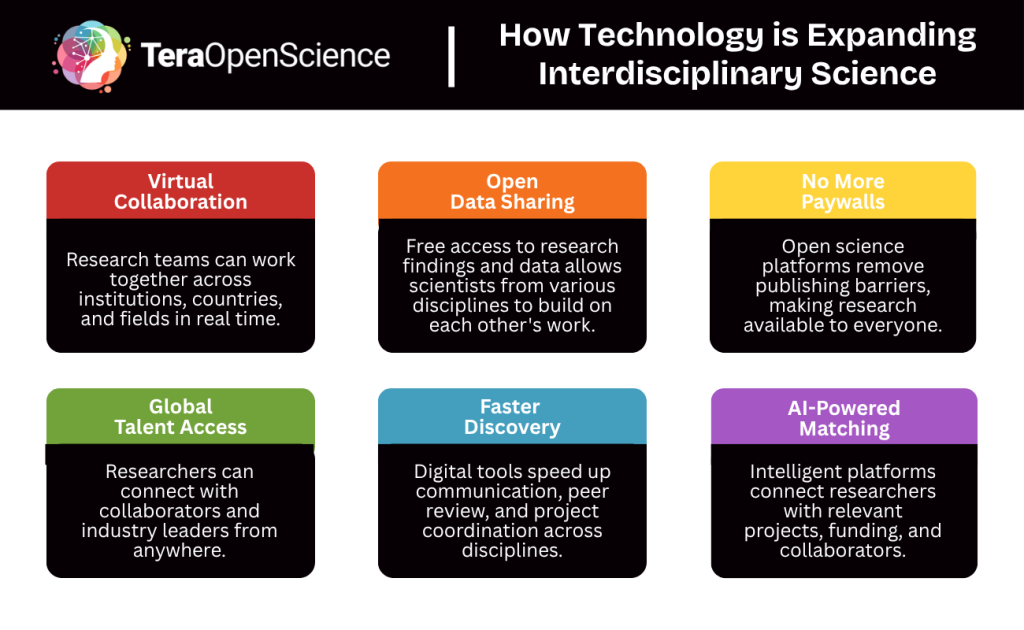
Digital platforms now allow research teams to coordinate projects, share data, review manuscripts, and communicate in real time from anywhere in the world. This is especially valuable for interdisciplinary work, where the right collaborator might be in a completely different institution, country, or field.
Open science platforms take this a step further by removing paywalls and institutional gatekeeping. When research findings, data sets, and methodologies are freely accessible, scientists from various fields can build on each other’s work more easily. This accelerates the pace of scientific discovery and opens doors for researchers who might otherwise be excluded from high-cost journal ecosystems.
Technology also supports the talent pipeline. Graduate students and early-career researchers can use digital platforms to showcase their work, connect with mentors, find collaborators for a research project, and gain visibility with industry professionals. This kind of access was difficult to come by even a decade ago, especially for those outside top-tier public university systems.
Where TeraOpenScience Fits In
TeraOpenScience is built to support the kind of cross-discipline, boundary-breaking work that interdisciplinary science demands. As an AI-powered open science platform, it connects students, researchers, and industry leaders in a shared virtual environment designed for real-world R&D collaboration.
Here’s what makes it particularly well-suited for interdisciplinary work:
- Virtual project workspaces that bring together research teams from different fields, institutions, and countries to collaborate on shared projects.
- Open discussion forums where researchers across scientific disciplines can exchange ideas, ask questions, and explore new directions outside of their home department.
- Career tools that allow graduate students and professionals to post CVs, dissertations, and project portfolios, making it easier to connect with hiring managers and collaborators who value cross-disciplinary experience.
- Grant facilitation and research support that helps researchers find funding and navigate the process of launching interdisciplinary projects.
- An open science model that makes findings and data accessible to a wider audience, removing the barriers that often slow down collaborative research.
For researchers who want to work across disciplines without being limited by geography, institutional affiliation, or access to expensive publishing platforms, TeraOpenScience offers a space where that work can happen.

Start Collaborating Across Disciplines
Interdisciplinary science is reshaping how we approach the most complex questions in research, health, technology, and the environment. But the impact of that work depends on having the right tools and the right community to support it. TeraOpenScience was built to be that community. Whether you’re a graduate student looking for hands-on experience, a faculty member seeking new collaborators, or an industry leader searching for fresh research talent, the platform is designed to bring the right people together around the work that matters. Join TeraOpenScience today and start building the cross-discipline connections that move science forward.