Sustainable cleaning products
Sustainable cleaning products
Environmental Science
Patrick Deconinck
Create a family of environmentaly friendly cleaning products that can become ma market leader worldwide. Big market opportunity. See attached document.
Why Eco-Friendly Cleaning Products Haven’t Dominated the Market
Environmentally friendly cleaning products have been available for years, yet they remain a niche segment rather than a market leader. Their limited adoption stems from a combination of perception challenges and economic barriers:
• Performance skepticism: Many consumers and commercial buyers perceive green cleaning products as less effective than traditional chemical-based alternatives. This belief—often rooted in outdated formulations—continues to hinder widespread acceptance, despite significant improvements in efficacy.
• Higher production costs: Sustainable ingredients, biodegradable packaging, and ethical sourcing typically drive up manufacturing expenses. These costs are passed on to consumers, making eco-friendly options less competitive in price-sensitive markets.
• Lack of standardization: The absence of universal definitions or certifications for what qualifies as “green” creates confusion and mistrust. Without clear benchmarks, consumers may question the authenticity of eco claims, further slowing adoption.
• Distribution and accessibility: In many regions, green products are less readily available or require specialized suppliers. This limits convenience and reinforces reliance on conventional brands.
• Resistance to change: Institutional buyers—such as schools, hospitals, and cleaning services—often stick with familiar products due to habit, contracts, or lack of training on green alternatives.
📈 The Market Is Shifting
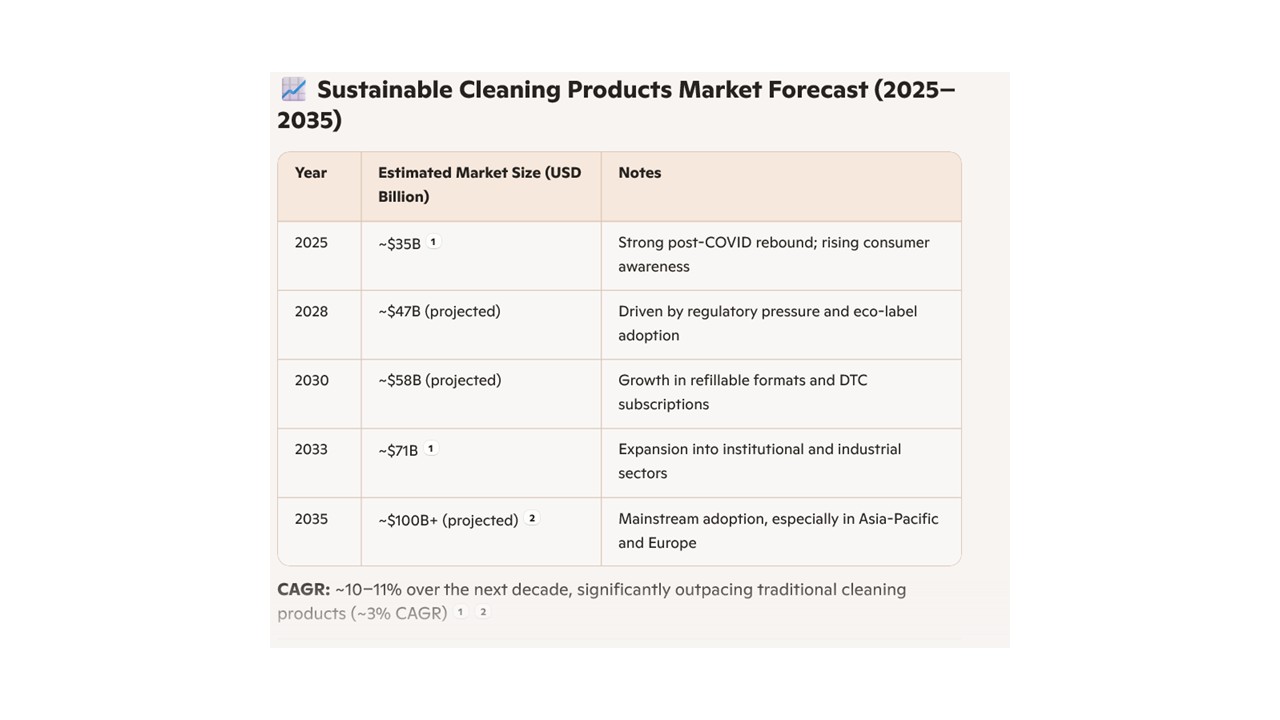
Despite these hurdles, the tide is turning. The global eco-friendly cleaning products market was valued at $31 billion in 2023 and is projected to reach $71 billion by 2032, growing at a CAGR of 11%. This growth is fueled by:
• Rising consumer awareness of health and environmental impacts
• Regulatory pressure on chemical usage and waste
• E-commerce platforms expanding access to niche sustainable brands
• Innovation in plant-based and biotech cleaning solutions
Potential Applications of Eco-Friendly Cleaning Products
🏠 1. Residential Use
• Daily household cleaning: Kitchens, bathrooms, floors, and laundry—especially for families with children or pets.
• Allergy-sensitive environments: Fragrance-free, non-toxic formulas for users with respiratory conditions or skin sensitivities.
• DIY refills: Concentrated pods or tablets for refillable bottles, reducing plastic waste and shipping costs.
🏢 2. Commercial & Institutional Cleaning
• Schools and universities: Promote healthier learning environments and align with sustainability goals.
• Healthcare facilities: Use non-toxic disinfectants that meet medical-grade standards without harsh chemicals.
• Hospitality industry: Hotels, resorts, and restaurants seeking
eco-certifications (e.g., LEED, Green Seal) can integrate green cleaning into their operations.
🏭 3. Industrial & Manufacturing
• Facility maintenance: Degreasers, floor cleaners, and equipment-safe solutions that reduce VOC emissions.
• Green janitorial services: Contracted cleaning companies offering eco-only packages to corporate clients.
🚗 4. Automotive & Transportation
• Car washes: Biodegradable soaps and water-saving systems.
• Public transit systems: Eco-friendly sanitation for buses, trains, and stations.
🛒 5. Retail & Consumer Goods
• Private label opportunities: Supermarkets and lifestyle brands launching their own sustainable cleaning lines.
• Subscription models: Monthly delivery of refills, bundled with other eco-home essentials.
🌍 6. Emerging Markets & Global Development
• Low-resource communities: Safe, affordable, and locally sourced cleaning solutions that reduce exposure to harmful chemicals.
• Disaster relief & humanitarian aid: Portable, non-toxic cleaning kits for shelters and temporary housing.
View Patent