KYLA: Know Yourself, Listen, Ask for Support An animated mental-health literacy project for teens
Public
Project Title
KYLA: Know Yourself, Listen, Ask for Support An animated mental-health literacy project for teens
KYLA: Know Yourself, Listen, Ask for Support An animated mental-health literacy project for teens
Category
Computer Science
Computer Science
Authors
bethanyjames052793@gmail.com
bethanyjames052793@gmail.com
Short Description
KYLA is primarily an applied behavioral and social science project, focused on adolescent developmental psychology and mental-health literacy. It also draws on public health.
KYLA is primarily an applied behavioral and social science project, focused on adolescent developmental psychology and mental-health literacy. It also draws on public health.
Long Description
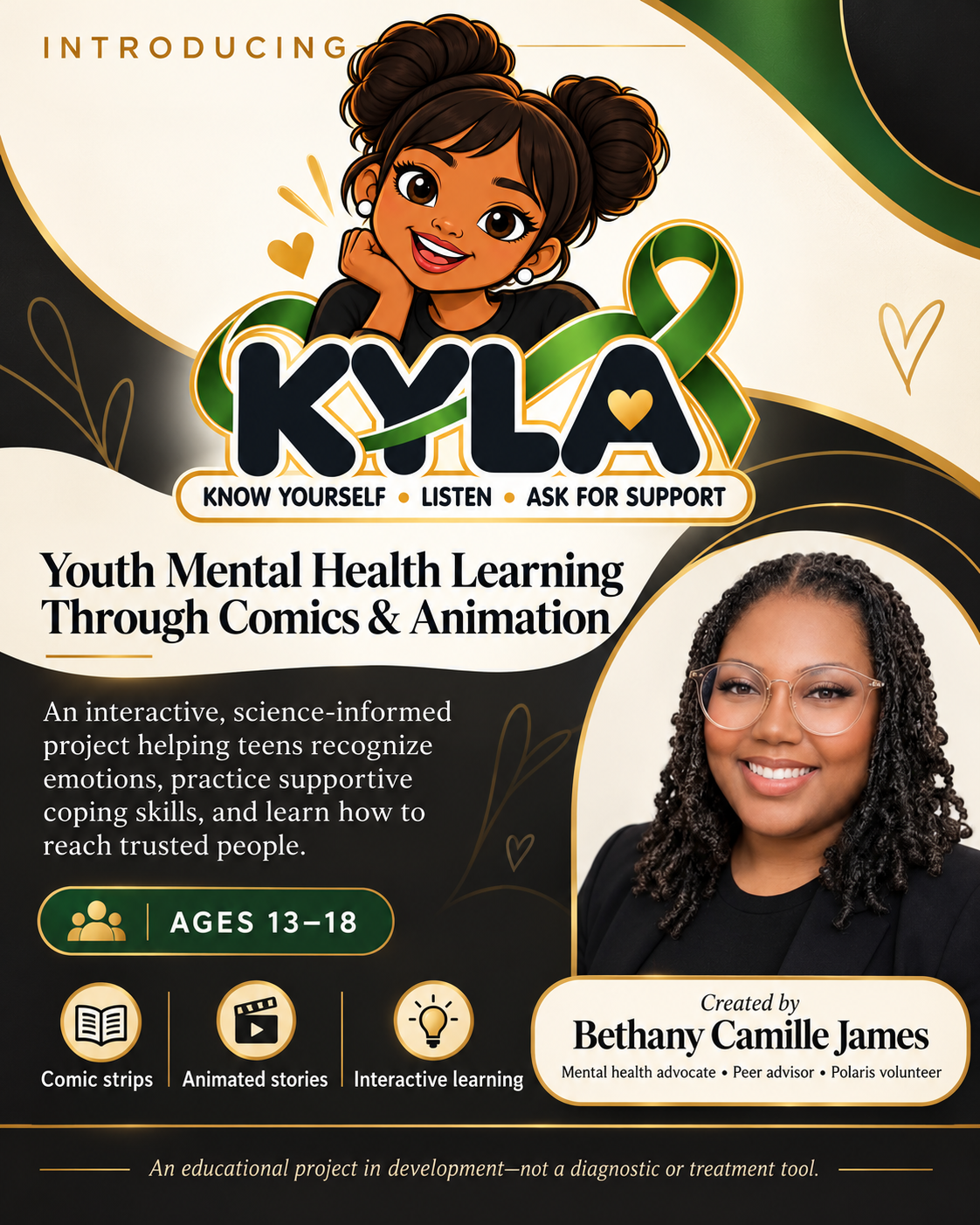
KYLA is a youth-centered comic and animation project that helps teens build mental-health literacy through relatable stories, practical skills, and clear pathways to support. Led by Kyla, a warm, expressive character, each short episode follows a young person through an everyday challenge—stress, loneliness, friendship concerns, online pressure, or uncertainty about asking for help. Each story helps viewers notice feelings and body cues, consider a healthy coping step, respond compassionately to a friend, and identify a trusted person they could talk to. Kyla’s guiding framework is: Know yourself. Yield to listening. Ask for support. The project will use youth-friendly language and visuals, be reviewed for scientific accuracy by qualified mental-health professionals, and be co-designed with teens so the stories feel respectful and relevant. KYLA is an educational resource, not a diagnostic or treatment tool. Its purpose is to encourage understanding, reduce stigma, and make it easier for young people to start a conversation with a trusted adult or mental-health professional. Science foundation and pilot plan The project addresses a meaningful need: the World Health Organization estimates that one in seven young people aged 10–19 experiences a mental-health condition. WHO also identifies coping skills, emotional awareness, supportive relationships, and access to care as important parts of adolescent mental-health promotion. Research on youth-focused games and stories offers a useful design direction. A school-based game program called Moving Stories found a reduction in personal stigma among participating adolescents, while a recent systematic review highlights youth co-design, storylines, and adult facilitation as promising design elements. The evidence supports carefully testing a project like KYLA; it does not establish that KYLA itself is effective yet. A first pilot could create four short comic or animation episodes: 1. “What Is My Body Telling Me?” — noticing stress and naming feelings 2. “I’m Here to Listen” — supporting a friend without trying to diagnose or fix them 3. “The Scroll That Changed My Mood” — recognizing online comparison and choosing a helpful next step 4. “How Do I Ask?” — practicing words for reaching out to a trusted adult For a small pilot, invite teens to review the stories for clarity, relevance, and whether the character feels relatable. Measure understanding, comfort discussing mental health, intended help-seeking, and usability—not whether the project treats or prevents a disorder. If you collect research data from minors, plan for appropriate parent/guardian permission, youth assent, privacy protections, and research ethics review. For the form’s technology field, choose the closest option to animation, digital media, or educational technology. For category, choose mental health education or youth education, if available.
KYLA is a youth-centered comic and animation project that helps teens build mental-health literacy through relatable stories, practical skills, and clear pathways to support. Led by Kyla, a warm, expressive character, each short episode follows a young person through an everyday challenge—stress, loneliness, friendship concerns, online pressure, or uncertainty about asking for help. Each story helps viewers notice feelings and body cues, consider a healthy coping step, respond compassionately to a friend, and identify a trusted person they could talk to. Kyla’s guiding framework is: Know yourself. Yield to listening. Ask for support. The project will use youth-friendly language and visuals, be reviewed for scientific accuracy by qualified mental-health professionals, and be co-designed with teens so the stories feel respectful and relevant. KYLA is an educational resource, not a diagnostic or treatment tool. Its purpose is to encourage understanding, reduce stigma, and make it easier for young people to start a conversation with a trusted adult or mental-health professional. Science foundation and pilot plan The project addresses a meaningful need: the World Health Organization estimates that one in seven young people aged 10–19 experiences a mental-health condition. WHO also identifies coping skills, emotional awareness, supportive relationships, and access to care as important parts of adolescent mental-health promotion. Research on youth-focused games and stories offers a useful design direction. A school-based game program called Moving Stories found a reduction in personal stigma among participating adolescents, while a recent systematic review highlights youth co-design, storylines, and adult facilitation as promising design elements. The evidence supports carefully testing a project like KYLA; it does not establish that KYLA itself is effective yet. A first pilot could create four short comic or animation episodes: 1. “What Is My Body Telling Me?” — noticing stress and naming feelings 2. “I’m Here to Listen” — supporting a friend without trying to diagnose or fix them 3. “The Scroll That Changed My Mood” — recognizing online comparison and choosing a helpful next step 4. “How Do I Ask?” — practicing words for reaching out to a trusted adult For a small pilot, invite teens to review the stories for clarity, relevance, and whether the character feels relatable. Measure understanding, comfort discussing mental health, intended help-seeking, and usability—not whether the project treats or prevents a disorder. If you collect research data from minors, plan for appropriate parent/guardian permission, youth assent, privacy protections, and research ethics review. For the form’s technology field, choose the closest option to animation, digital media, or educational technology. For category, choose mental health education or youth education, if available.
Potential Applications
KYLA could be developed into a series of digital comic strips, short animations, or interactive stories that introduce teens to mental-health concepts in an engaging, accessible format. Schools, libraries, youth organizations, and community programs could use the stories to start conversations about recognizing emotions, supporting friends, coping with everyday stress, and reaching out to trusted adults.
Future versions could include interactive choices, reflection prompts, and links to age-appropriate support resources. The project would be an educational and awareness tool—not a diagnostic or treatment service.
KYLA could be developed into a series of digital comic strips, short animations, or interactive stories that introduce teens to mental-health concepts in an engaging, accessible format. Schools, libraries, youth organizations, and community programs could use the stories to start conversations about recognizing emotions, supporting friends, coping with everyday stress, and reaching out to trusted adults.
Future versions could include interactive choices, reflection prompts, and links to age-appropriate support resources. The project would be an educational and awareness tool—not a diagnostic or treatment service.
Open Questions
How do teens respond to Kyla as a guide for learning about mental health?
* Which comic and animation formats feel most engaging, relatable, and emotionally safe to young people?
* Do interactive choices and reflection prompts help teens understand emotions, coping strategies, and ways to seek support?
* How can the project represent different teen experiences while avoiding stereotypes and stigma?
* What accessibility features and trusted-support resources should be included?
How do teens respond to Kyla as a guide for learning about mental health?
* Which comic and animation formats feel most engaging, relatable, and emotionally safe to young people?
* Do interactive choices and reflection prompts help teens understand emotions, coping strategies, and ways to seek support?
* How can the project represent different teen experiences while avoiding stereotypes and stigma?
* What accessibility features and trusted-support resources should be included?
AI Assistant
1. My training includes a wide range of topics, but I may not cover every specific field in depth.
2. Behavioral and social sciences are complex and continually evolving fields.
3. My knowledge is based on data available up to October 2023, and some areas may be less represented.
4. If you have specific questions about behavioral or social science, I can try to provide information based on what I know.
1. My training includes a wide range of topics, but I may not cover every specific field in depth.
2. Behavioral and social sciences are complex and continually evolving fields.
3. My knowledge is based on data available up to October 2023, and some areas may be less represented.
4. If you have specific questions about behavioral or social science, I can try to provide information based on what I know.
Keywords
#IdeaInnovationBusiness
#IdeaInnovationBusiness
Email
bethanyjames052793@gmail.com
bethanyjames052793@gmail.com