At a Glance
Collaborative research has evolved from informal partnerships between researchers at a single academic institution to global, technology-driven projects involving team members from multiple disciplines and countries. New tools like cloud computing, AI-powered platforms, and open science ecosystems are transforming how academic researchers, graduate students, and industry professionals work together toward a common goal.
The research community has always relied on collaboration. From early laboratory partnerships to multi-site clinical trials funded by organizations like the National Cancer Institute, working together has been central to scientific progress. But the methods for conducting collaborative research projects have changed dramatically.
A decade ago, a principal investigator might coordinate a research project through emails, phone calls, and occasional in-person meetings. Today, dedicated teams can work across continents in real time, sharing data analysis results instantly and co-authoring manuscripts without ever meeting face-to-face. This shift is reshaping how we approach everything from infectious disease research to computational neuroscience, and it is opening doors for researchers from every background and national origin.
The Traditional Model of Collaborative Research
Before examining new technologies, it helps to understand how collaborative research traditionally operates.
In the conventional model, a faculty member or assistant professor at an academic institution would identify a research question, then seek out external collaborators with complementary expertise. This often meant:
- Writing formal cooperative agreements between research institutions
- Navigating institutional review board requirements for studies involving human subjects
- Managing indirect costs and funding distribution among participating organizations
- Coordinating study team meetings across different time zones
- Handling ancillary review processes for selected projects
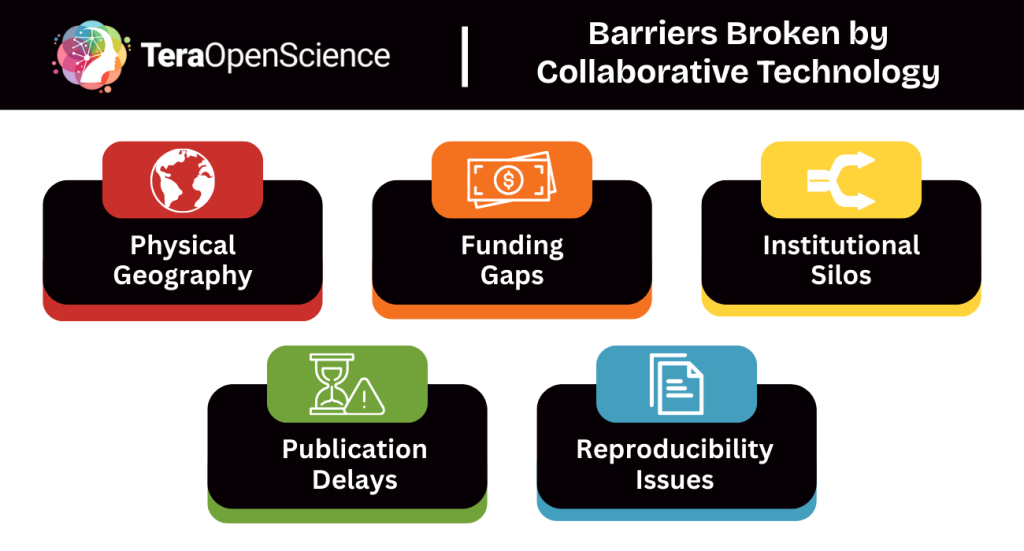
These collaborative projects often involved NIH institutes or other funding organizations providing grants to support the work. An intramural investigator might partner with researchers at outside universities, but the logistics were cumbersome. Data sharing required shipping physical drives or navigating clunky file transfer systems. Manuscript drafts circulated via email, creating version control nightmares.
The result was that many collaborative research projects moved slowly. A research study on alcohol abuse or human development might take years longer than necessary simply because of coordination challenges, not scientific complexity.
Technologies Transforming Collaborative Research
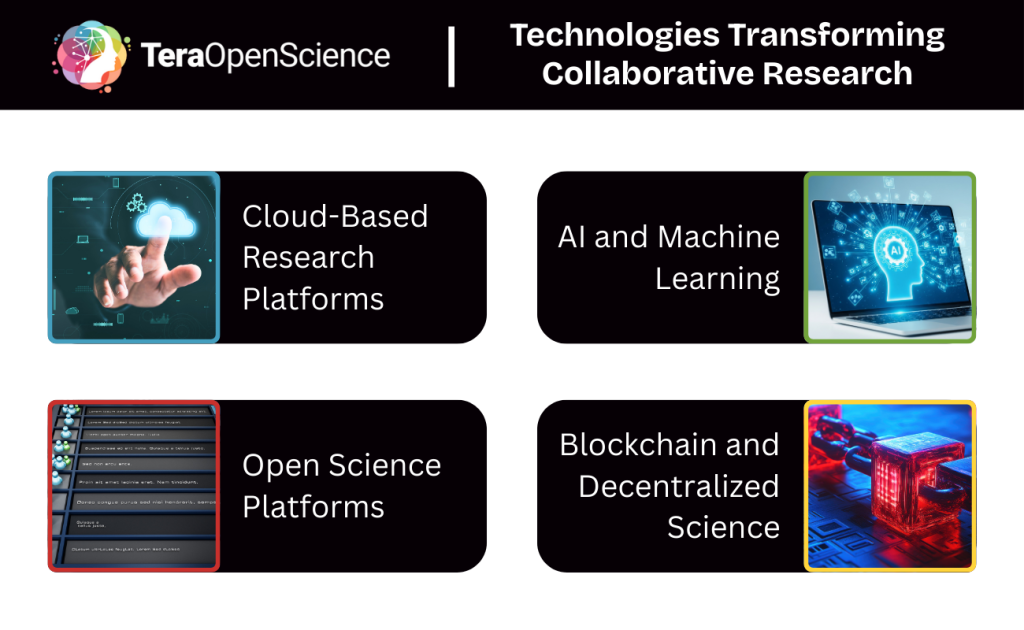
Several technologies have emerged to address these longstanding barriers.
Cloud-Based Research Platforms
Cloud computing has eliminated the need for researchers to be in the same physical location. Modern platforms allow team members to access shared datasets, analysis tools, and project documentation from anywhere with an internet connection.
For a clinical trial spanning multiple sites across the United States, this means:
- Real-time access to enrollment data
- Centralized storage for participant information
- Automated backups and security protocols
- Simplified compliance with regulatory requirements
Artificial Intelligence and Machine Learning
AI tools are accelerating data analysis in ways that were unimaginable even five years ago. A graduate student working on a research project can now use machine learning algorithms to identify patterns in datasets that would have taken months to analyze manually.
In fields like computational neuroscience, AI is helping researchers process imaging data faster and more accurately. For infectious disease research, machine learning models can predict outbreak patterns and identify potential drug candidates.
Open Science Platforms
Perhaps the most transformative development is the rise of open science platforms. These digital ecosystems connect researchers across disciplines, institutions, and borders, creating new possibilities for collaboration.
Open science platforms offer several advantages over traditional collaboration methods:
- Reduced barriers to entry: A researcher at a smaller institution can collaborate with teams at major research universities
- Faster knowledge sharing: Findings can be shared immediately rather than waiting for traditional publication cycles
- Greater diversity of perspectives: Teams can include members from different backgrounds, disciplines, and geographic regions
- Transparent methodologies: Open access to research methods allows for better reproducibility
These platforms align with the institute’s mission of many funding organizations to promote accessible science. They also help address concerns about research being locked behind paywalls or restricted to well-funded institutions.
Blockchain and Decentralized Science
Newer technologies like blockchain are beginning to influence collaborative research as well. Decentralized science (DeSci) platforms use blockchain to create transparent records of contributions, manage intellectual property, and even reward participants through cryptocurrency systems.
This approach can help solve persistent problems in academic collaboration:
- Clearer attribution for each team member’s contributions
- Reduced disputes over intellectual property
- New funding models that bypass traditional grant mechanisms
- Incentives for sharing data and methodologies openly
How These Technologies Are Helping
The impact of these technologies extends beyond simple convenience. They are fundamentally changing who can participate in research and how quickly discoveries can move from laboratory to clinical practice.
Democratizing Access
A graduate student in a developing country can now collaborate on research projects with a faculty member at a leading university in the United States. Geography and institutional prestige matter less when everyone has access to the same platforms and tools.
Accelerating Discovery
When team members can share findings instantly and analyze data collaboratively, research moves faster. A funding opportunity that once might have supported a five-year study can now potentially yield results in three years.
Improving Reproducibility
Open science platforms that require researchers to share their methodologies and datasets address the reproducibility crisis that has plagued many fields. Other researchers can verify findings, build upon existing work, and identify errors more quickly.
Enabling Interdisciplinary Work
Complex problems like climate change, global health challenges, and sustainable development require expertise from multiple fields. Technology platforms make it easier to assemble dedicated teams with diverse skill sets, from biologists to economists to data scientists.
Challenges and Considerations
These technologies are not without challenges. Research institutions still need to address questions about data security, intellectual property, and equitable access. Not all researchers have reliable internet access or the technical skills to use advanced platforms effectively.
Institutional review boards are still developing frameworks for overseeing research conducted through digital platforms. Questions about jurisdiction, consent, and data ownership become more complex when collaboration spans multiple countries.
The following items remain important considerations for any collaborative project:
- Data privacy and security protocols
- Clear agreements about intellectual property
- Equitable recognition of all contributors
- Accessibility for researchers with limited resources
- Compliance with funding organization requirements
The Future of Collaborative Research
The trajectory is clear: collaborative research will continue to become more global, more interdisciplinary, and more technology-enabled. Open science platforms represent the next phase of this evolution, creating spaces where researchers can connect, share, and build upon each other’s work without the traditional barriers of geography, institution, or funding level.
For the research community, this means more opportunities to tackle ambitious questions that require diverse expertise. For society, it means faster progress on the challenges that matter most, from developing new treatments to understanding human development to addressing environmental threats.

Join TeraOpenScience’s Collaborative Research Movement
TeraOpenScience is building the infrastructure for this new era of collaborative research. Our open science platform connects graduate students, academic researchers, and industry professionals in a global ecosystem designed to accelerate discovery and democratize access to research.
Students can join for free to gain real-world project experience and visibility with potential employers. Researchers can find external collaborators and share their work openly. Organizations can tap into global talent to advance their R&D goals. Anyone is free to engage in the exchange of ideas through our various forums.
Ready to be part of the future of collaborative research? Create your account and start collaborating today.